From the woods to the stage: making theatre in Nanjing
A walk through the woods, a few coloured scarves and stories offered by an audience. At the October 2026 programme in Nanjing, these became the starting points for making theatre together.
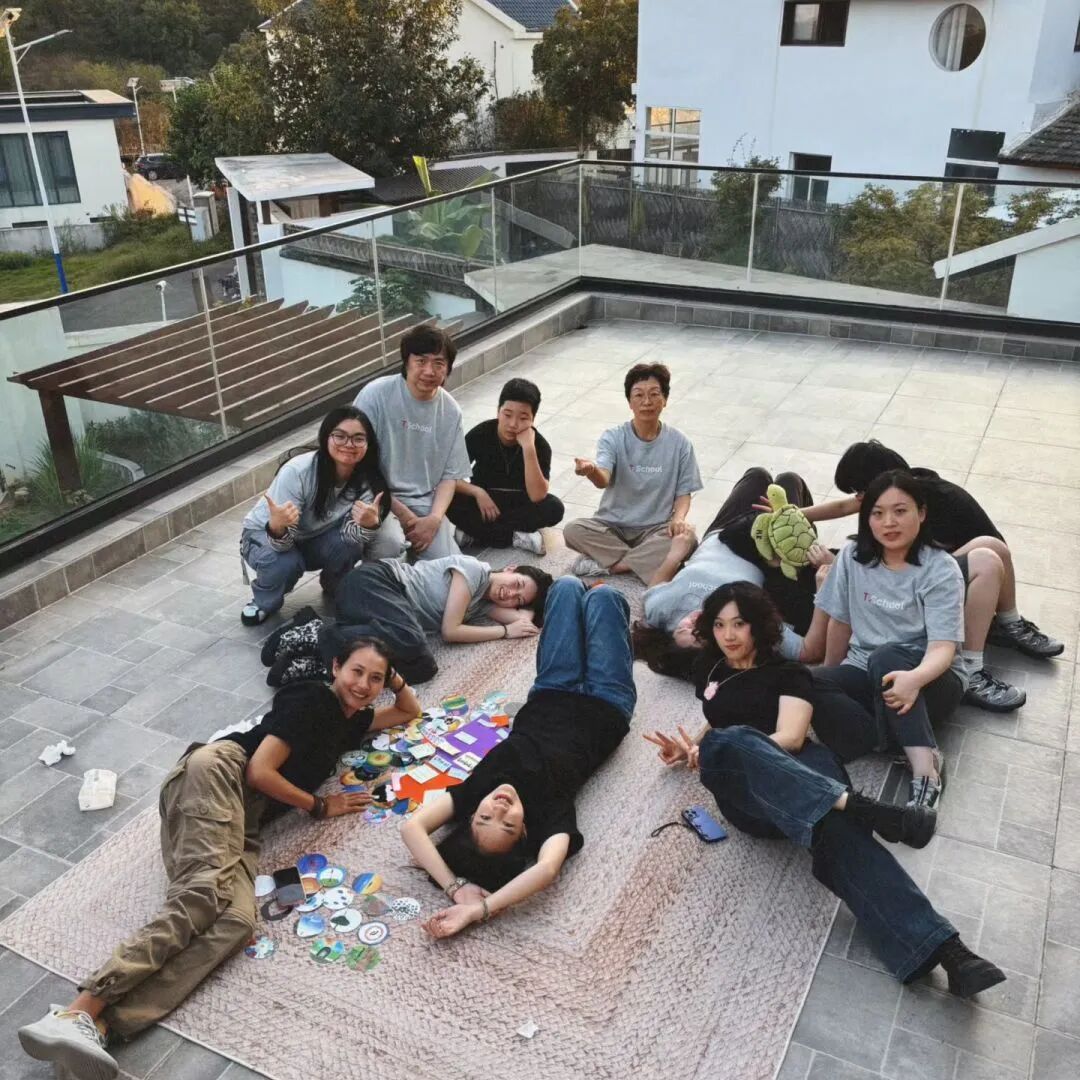
On 6 October, students put on a performance called Passion at the programme venue in Guli, Nanjing. It was open to the local community. Audience members shared things they cared about: an absorbing interest, something they had kept going with, or a question they still could not quite answer. The students listened, then responded through movement, music and short scenes.
At the start of the four-day programme, many of those performers had arrived expecting to learn acting techniques. Some had never tried drama before. The programme began somewhere more familiar: meeting people, working out how to trust them and finding a way to join in.
Getting comfortable with one another
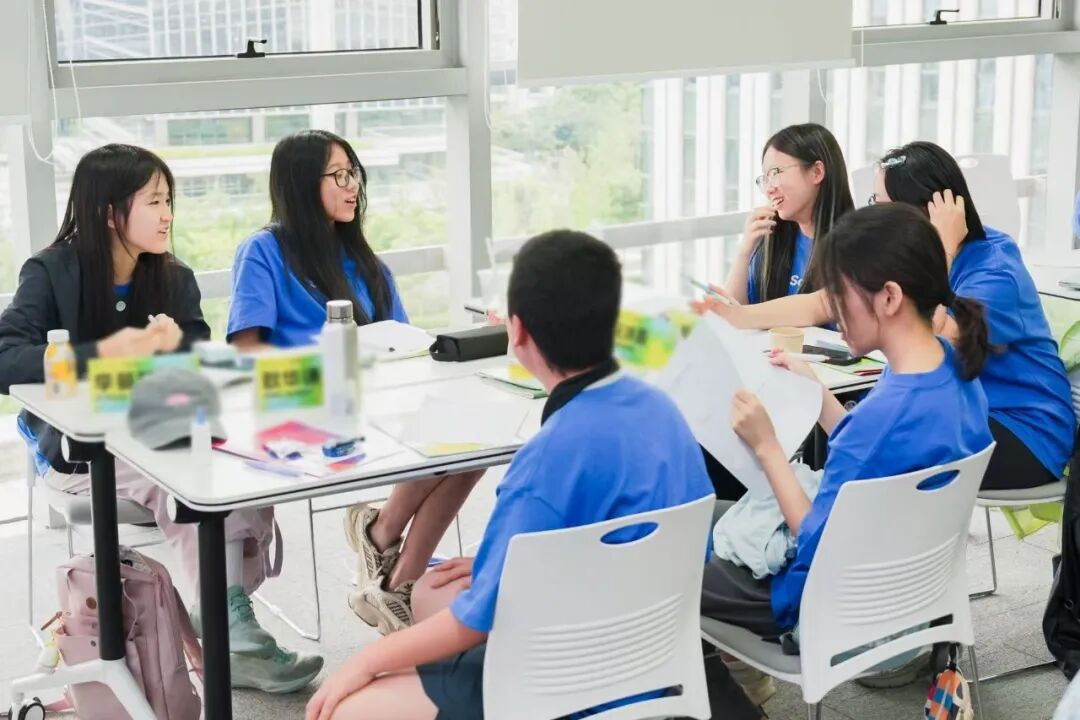
Tutor Dou Chenqian, known as Doudou, led the opening drama games. Students passed a sound or a movement around the circle and found gestures to introduce themselves. Remembering a name became something they did with their bodies as well as their voices.
In group sessions led by psychotherapist Ellie, students used positions in the room and picture cards to express where they were starting from and what they hoped for. They made small containers, wrote letters to place inside them and contributed lines to a group poem.
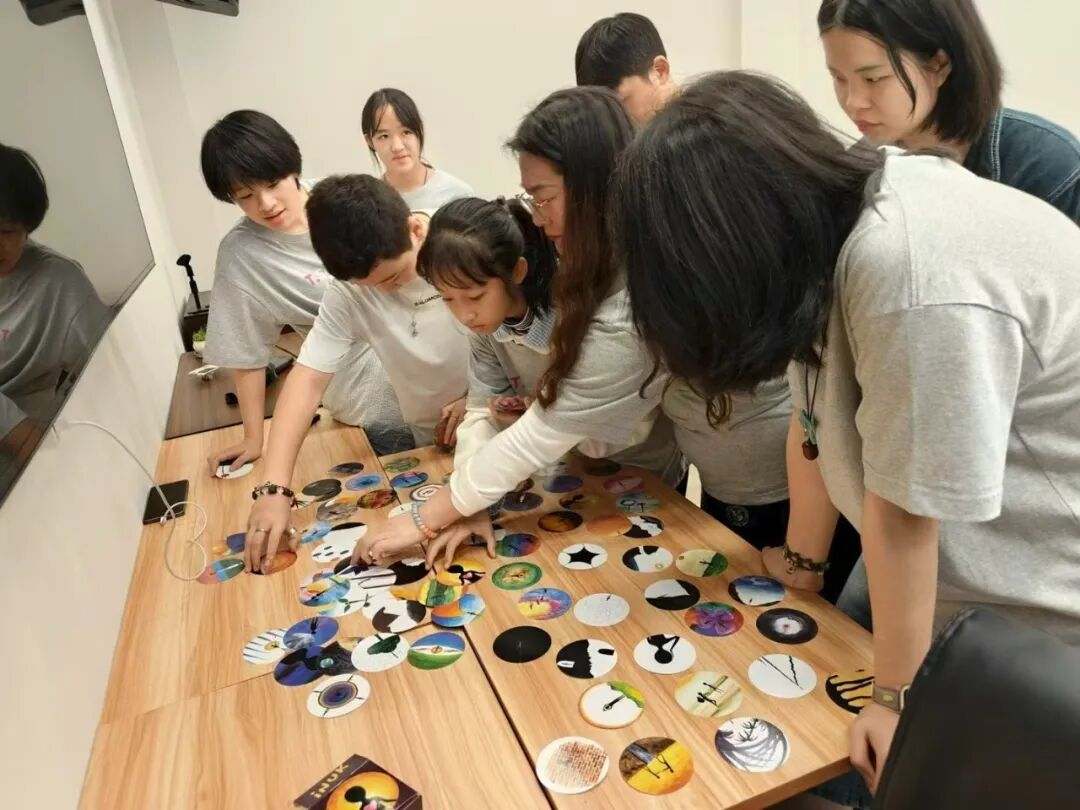
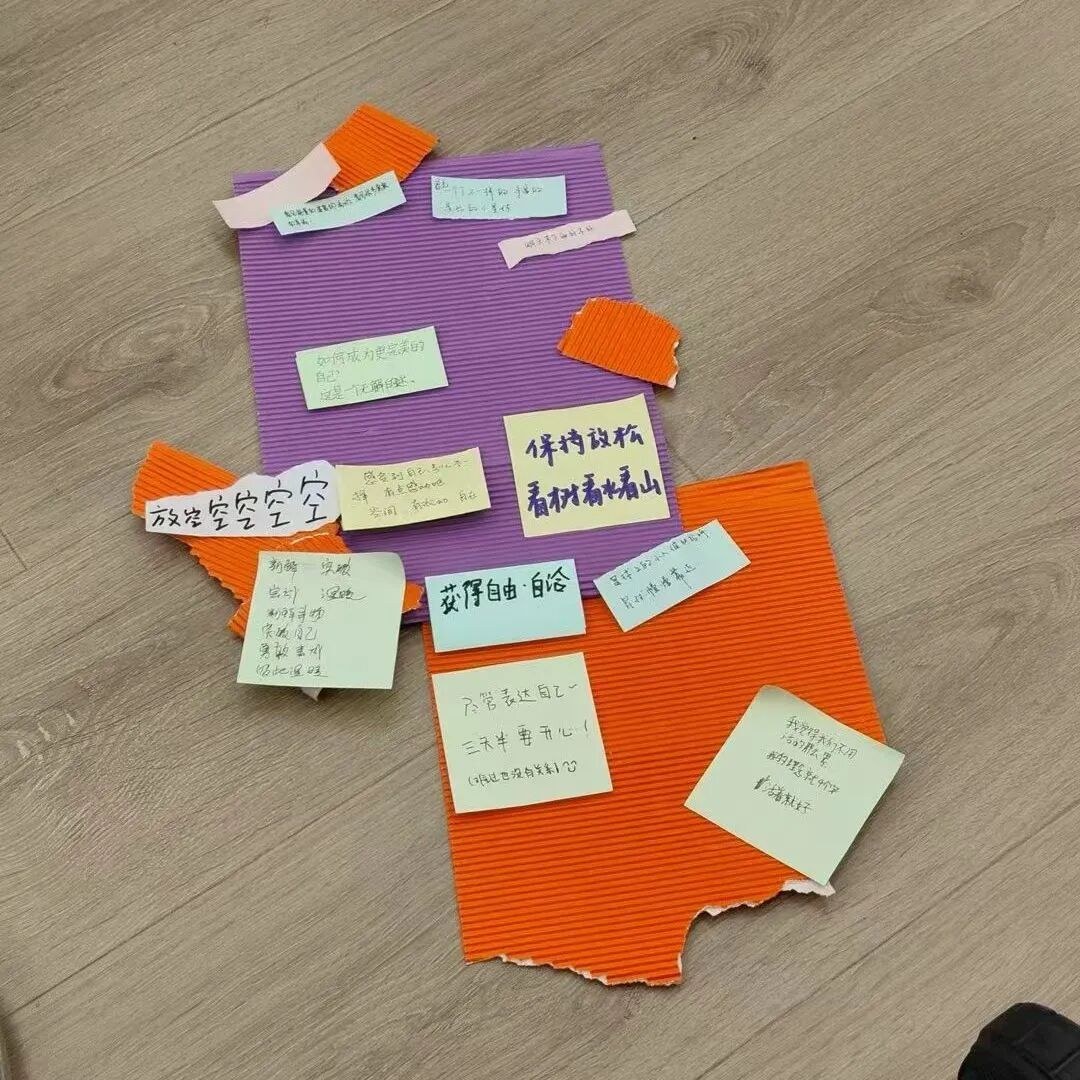
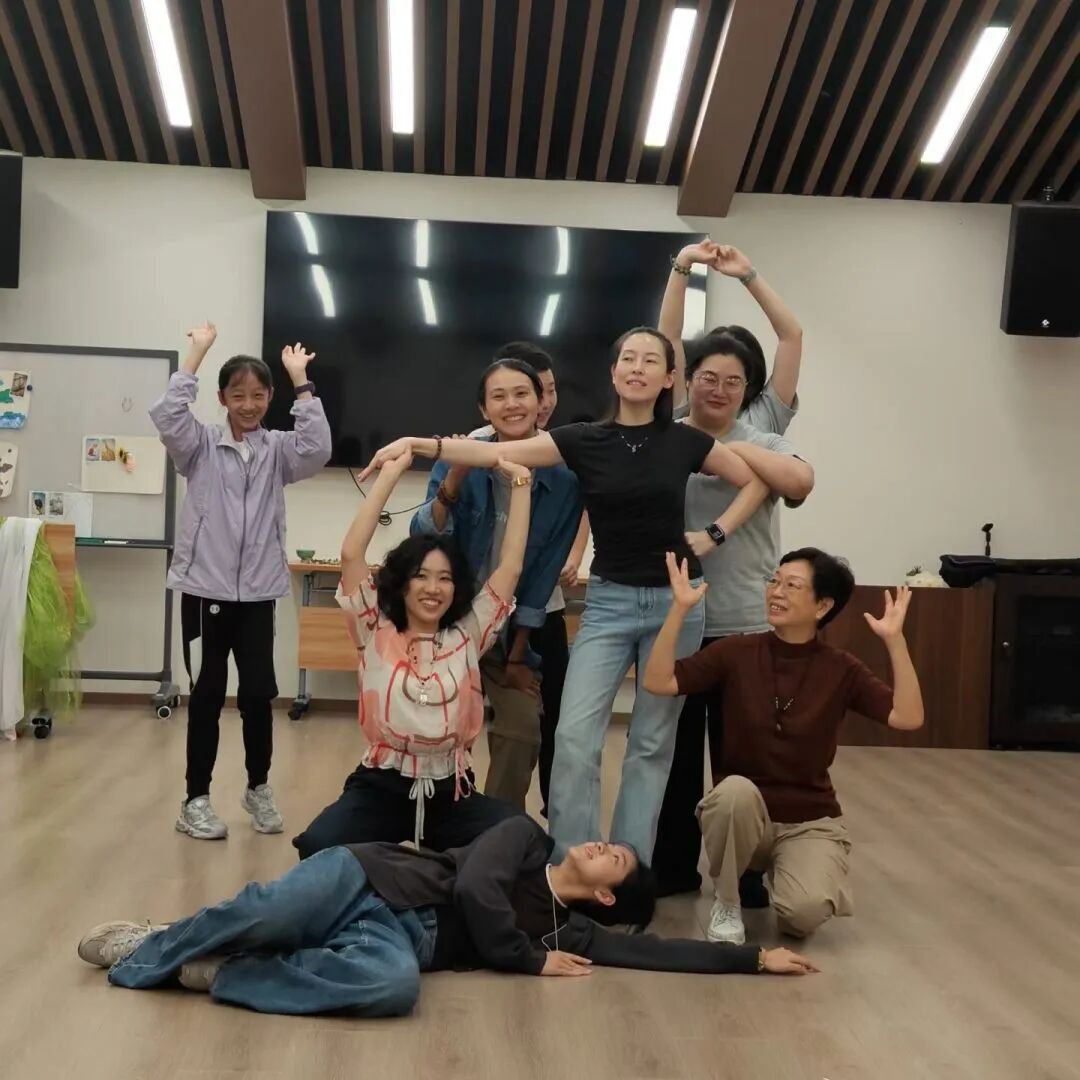
Later, students tried still images made with their bodies. At the end of the session, one person described a feeling and others found a way to show it. These exercises asked for attention and a willingness to try, rather than a polished performance.
The classroom moves into the woods
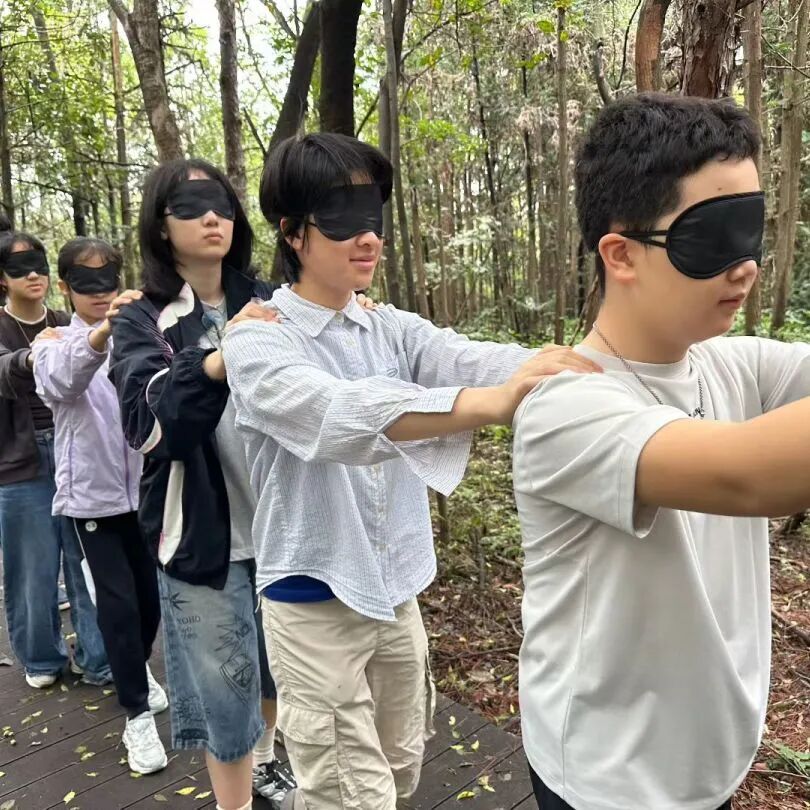
The following morning, students entered the woods wearing blindfolds, each with a hand on the shoulder of the person in front. With the view taken away, leaves underfoot, the wind and the person ahead became much more noticeable.
Afterwards, they explored with their sight restored, collecting leaves and noticing bark, smells and textures. For a tree storytelling exercise, each student chose a tree and imagined its history: how long it had stood there, what it might have weathered and what had helped it remain standing. Drawing and writing gave them a way to connect that imagined history with their own experiences.
Listening becomes theatre
The students then began learning Playback Theatre, in which a real experience shared by someone in the audience is retold through improvised performance. The task is to pay close attention to the story and find a response that its teller recognises.
They worked with movement, sound, poetry and simple arrangements of objects. Guo Yibing, known as Bingbing, led further games and performance exercises. A scene could change without warning; the group had to notice and respond together.
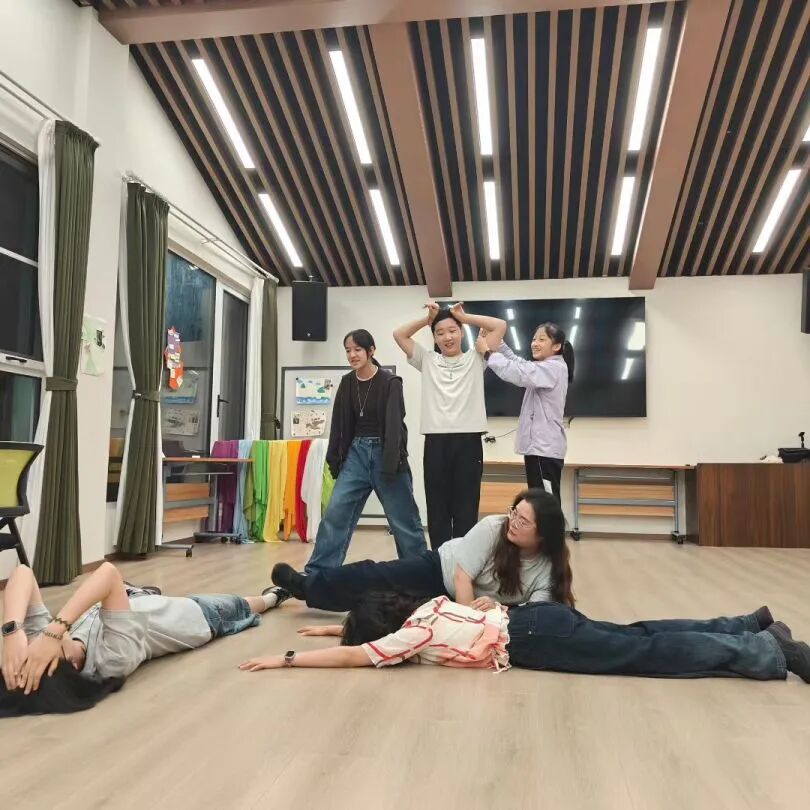
On the third day, the theme of passion helped focus the work. A chair and coloured scarves could suggest climbing, being in the spotlight or finding somewhere steady to stand. Students also printed with leaves, cooked together and turned a transparent umbrella into a poster for the final performance. Everyday things supplied material for the performance.
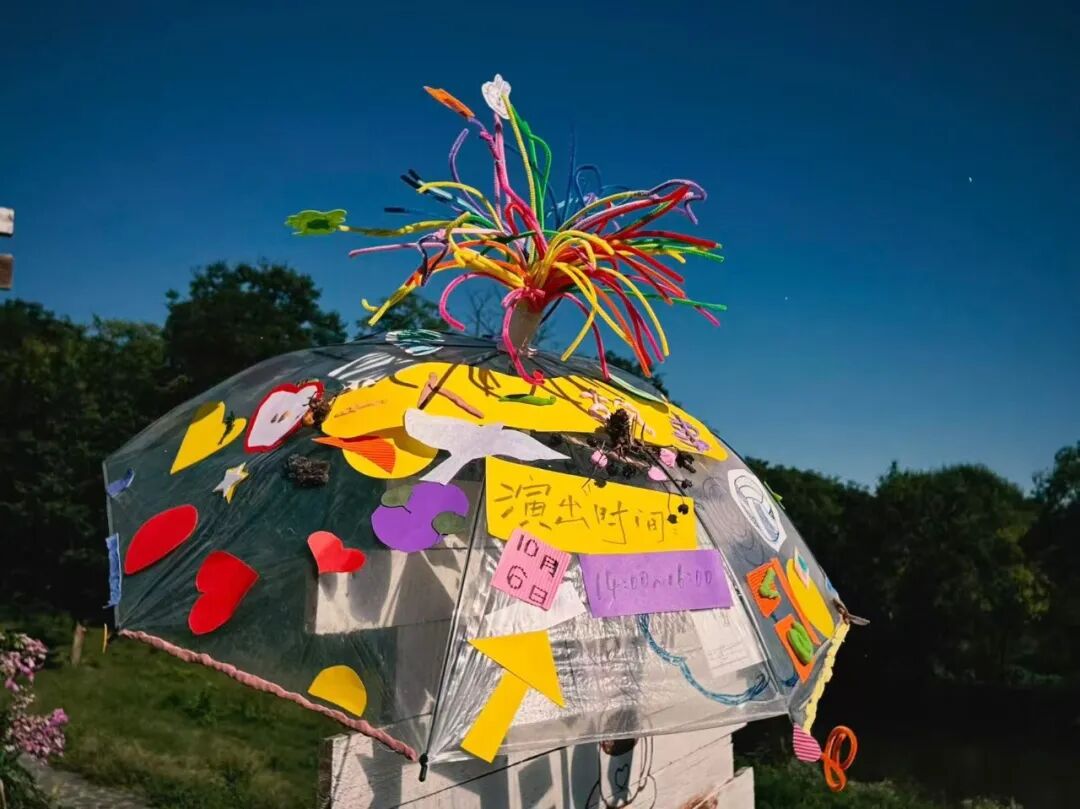
Opening the doors to an audience
At 2.30 pm on the final day, the group performed Passion. Doudou guided the event as students took their places among the chairs, fabric and instruments. The opening games helped the audience settle in before people began offering their stories.
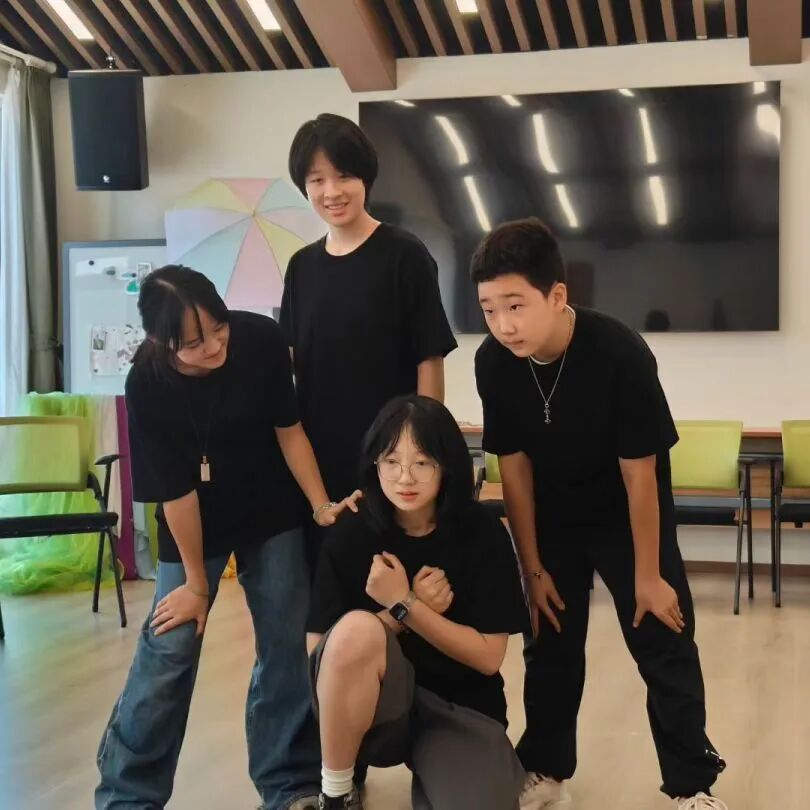
Some stories were confident; others held uncertainty. The students’ job was to hear what mattered in each one and make space for it on stage. By then, they had spent four days practising how to do that together.
When the performance ended, the props went back into the classroom. The more useful things to take home were less easy to pack: having spoken in front of others, having followed an unexpected idea and knowing what it feels like when someone listens closely.